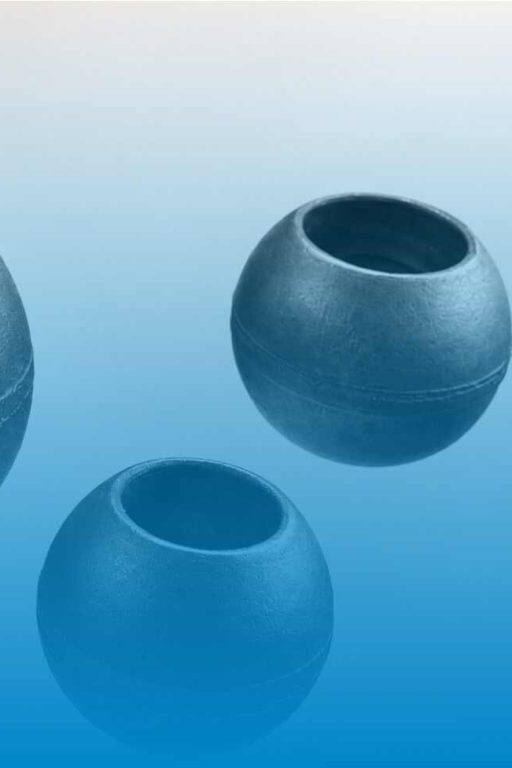
Product Reliability
Zero porosity.
Zero compromises.
When failure is not an option, quality cannot be left to chance. Discover the five pillars behind the reliability of every valve ball we manufacture.
- Forged structure with no porosity risks.
- Repeatable and controlled manufacturing process.
- Proven experience in high-volume production.
- Automotive-grade quality standards.
- Advanced engineering and metallurgical support.

Automation and Robotics
Automated forging for consistent quality
Robotic handling and automated manufacturing processes improve dimensional repeatability, reduce variability and ensure stable quality across production batches.
- Robotic forging operations.
- Automated process control.
- Stable dimensional repeatability.
- Reduces process variability.
- Full traceability.
- Automotive-derived quality standards.

Technical Specialization
Complex projects are where we perform best
Specialized in forged stainless-steel components, complex geometries and demanding sealing applications for industrial valve manufacturers.
- Stainless steel forging specialists
- Carbon, alloy and stainless steels
- Heat treatment expertise
- Simulation-driven process validation
- Engineering support
Made in USA
US steel. 100% local production. No tariffs. No overseas supply chain risks.
Alcorta Forging Group operates a forging facility in New Boston, Michigan, supplying forged valve components CONTACT US for domestic production and local operational support

BABA
BABA compliant manufacturing
Domestic steel sourcing and local manufacturing help customers comply with Build America, Buy America requirements for infrastructure projects.
- Domestic steel
- Local manufacturing
- Reduced tariff exposure
- Shorter supply chains
- Lower geopolitical risk

Operational Advantages
Faster and more predictable supply
Local production improves operational visibility and reduces dependency on overseas supply chains.
- 6–7 weeks to-market
- Available production capacity
- Michigan facility
- Domestic steel
Our Products
Proven in demanding industrial applications
Industrial manufacturers trust us for forged valve components requiring reliability, traceability and stable supply performance.
Technical Specifications
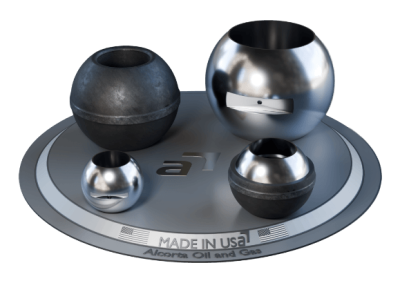

Steel
Carbon, Alloyed, Stainless

Size
1/2”, 2”, 3”, 4”

Weight
From 1 to 30 lbs

Finishing
Raw forging or Machined

Volume
From 200 to 500,000 pcs/year
Engineering Knowledge Center
Solving valve manufacturing challenges
Find practical answers to common questions about materials, geometry, tolerances, heat treatments, testing and manufacturability in forged valve ball applications.
How can Alcorta Forging Group help reduce time-to-market?
Combining engineering and simulation capabilities, forging expertise and early-stage collaboration, Alcorta Forging Group helps customers reduce development risks and accelerate the transition from concept to production.
Forged or cast valve balls: which option is best for my application?
The answer depends on the performance requirements of the valve. Forged valve balls provide a denser and more homogeneous material structure, eliminating porosity-related risks and improving sealing integrity, mechanical strength and reliability in demanding applications.
How to select the right steel grade for a valve ball?
Material selection depends on factors such as operating pressure, temperature, corrosion resistance requirements and mechanical performance targets. Alcorta Forging Group can support customers in evaluating the most suitable material for each application.
Can forging help improve the machining of a valve ball?
Yes. Geometry has a direct impact on machining and steel cost. Alcorta Forging Group supports customers during the design phase to assess feasibility and optimize forged component geometries.
How are the required mechanical properties achieved?
Mechanical properties are influenced by grade selection, forging parameters and heat treatment processes. Achieving the right combination of strength, hardness and toughness requires a comprehensive engineering approach.
What tests are performed to validate a forged valve ball?
Validation requirements vary by project and customer specifications. Typical evaluations may include dimensional inspections, material verification, hardness measurements and other tests required to confirm compliance with technical requirements.
How does heat treatment affect valve ball performance?
Heat treatment plays a critical role in determining the final properties of a forged component. The appropriate process can improve strength, hardness, wear resistance and overall performance depending on the application’s requirements.